CUCAMELONS: GRAPE-SIZED CUKES
Doll’s house-sized ‘watermelons’ that taste of pure cucumber with a tinge of lime. These little guys are officially the cutest food known to man & oh-so-easy to grow even for real beginners. Let me show you how to get started…
HOW TO GROW CUCAMELONS:

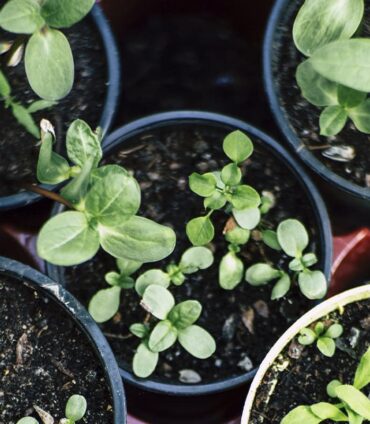
Cucamelons can be grown in pretty much the exact same way as regular cucumbers, only they are far easier. They don’t need the cover of a greenhouse, fancy pruning or training techniques and suffer from very few pests. Sow the seed from April to May indoors and plant out when all risk of frost is over. Give them a support the scramble over, keep well watered and that’s pretty much all you will need to do!

Harvest them when they are the size of a grape, but still nice and firm.

They make pretty, high-yielding vines that can be planted really close together to get the most out of a small space – as little as 15cm between plants around a trellis.

My harvest from just 4 plants!
FINDING CUCAMELON SEEDS:
Want to know where you can get your hands a little plant?
I have teamed up with the lovely plant geeks at Suttons Seeds to sell Cucamelon Seeds as part a brand new ‘Homegrown Revolution’ range of weird and wonderful edibles. Why now check ‘em out?
HOW TO EAT CUCAMELONS:
The fruit can be eaten straight off the plant, or tossed with olives, slivers of pepper and a dousing of olive oil. Perfect for a quirky snack with drinks – or even popped like an olive in a cheeky martini.
PICKLED CUCAMELONS WITH MINT & DILL
To preserve their virtues right in to the depth of winter, you can even make cucamelon dill pickles. Fantastic in a simple ham sandwich or with a fancy cheeseboard.

They can be pickled whole, however slicing these little fruit in half and pre-salting them will result in far more crisp result – not to mention that fact that they will be ready in half the time.

Pre-salting simply involves sprinkling the sliced fruit with a really generous amount of sea salt in a colander (about 1 tbsp per cup of cucamelons) and setting them over a bowl for 20 minutes or so. This will draw out the excess water from the fruit, which prevents the fruit from diluting the vinegar during the pickling process.
After the 20 minutes are up give them a good rinse, pat dry with some paper towels and you are ready to go!

You can flavour the pickling vinegar with anything you fancy. My favourite mix combines dill, mint, pickling spice and a sprinkling of pink peppercorns. Add a generous sprinkling of sugar and salt and stir the mix to combine.

Adding an (optional) scrunched up vine or oak leaf will further help ensure a crisp result, as the tannins in the leaves will inhibit natural enzymes within the fruit that can cause softness.

Top up with a good quality vinegar to cover the fruit, seal the jar and give it a good shake.

Pop it in the fridge and they will be ready in a just a week!
For full instructions on how to grow, cook and eat Cucamelons check out pg 101 of my new book Homegrown Revolution!
Tags: Cucamelons


Hi James
My Melothria plants frequently produce quite large roots by the end of the season, but I can’t find any references to their edibility. Have you tried them?
You’ve noticed that too? I have looked everywhere and can’t find any info on whether the roots are edible as well sadly. Presumably though if they were, they would surely also be eaten by the same communities in Mexico where their fruit is popular?
You know you can lift ‘em and store ‘em in cool place over winter, just like you would a Dahlia, to plant out the next spring and get earlier crops….
Hi James,
I’m trying cucamelons this year and I would like to know if you have any information on companion planting with them.If you are running any trials I would be pleased to be involved and submit any results.
Melothria heterophylla (Lour.) Cogn.
Back
Yes, the roots are edible Rhizowen
Botanical name: Melothria heterophylla (Lour.) Cogn.
Synonmous name:Zehneria umbellata Thw.
Family name:Cucurbitaceae
Common name:
Genus:
A large genus of annual or perennial climbers or herbs occurring in the tropics of the world. Leaves polymorphous. Flowers are small and yellow. Some species are medicinal and in some species the fruit is edible.
Species:
A herbaceous plant with tuberous root occurring throughout India. The plant bears polymorphous leaves and small yellow flowers coloured unisexual flowers. Fruit is brown coloured with many sub-spherical, smooth seeds. The roots, leaves and fruits are edible.
Hi, how high/wide do these vines grow please…
Jonathan
About 10cm-15cm wide & 1.2m-1.5m high. The pics are of 6 plants spaced 15cm apart.
Hello,
Are we able to save seed from these, or are they hybrids?
Thank you
I would like to know the answer to this as well. These are fascinating!
Where can I get seeds for these little darlings. I LOVE cucumbers and am now obsessed with these melons.
Yup. You can buy both seeds & young plants from my new range at Suttons Seeds. http://www.suttons.co.uk
Are they GMO seeds?
Are they available in the United States? and if so, where do I find them?
Thanks
Yes they are available in the United States I purchased them from Terroir Seeds out of Arizona I believe, we live in Indiana but they came really fast!
otherwise known as ‘mexican sour gherkin’
Ae these genetically modified fruit? What is the background? How many days from transplanting until ripe? They look interesting.
Nope they’re not genetically modified. In fact they’re actually a very old-school crop cultivated since Aztec times in Mesoamerica. It’s just taken them a while to become well known outside their native range.
Melothria heterophylla (Lour.) Cogn.
Back
Yes, the roots are edible Rhizowen
Botanical name: Melothria heterophylla (Lour.) Cogn.
Synonmous name:Zehneria umbellata Thw.
Family name:Cucurbitaceae
Common name:
Genus:
A large genus of annual or perennial climbers or herbs occurring in the tropics of the world. Leaves polymorphous. Flowers are small and yellow. Some species are medicinal and in some species the fruit is edible.
Species:
A herbaceous plant with tuberous root occurring throughout India. The plant bears polymorphous leaves and small yellow flowers coloured unisexual flowers. Fruit is brown coloured with many sub-spherical, smooth seeds. The roots, leaves and fruits are edible.
[...] CUCAMELONS: GRAPE-SIZED CUKES Pos [...]
I’m excited to see you. I watch you show each week. I also want to plant these cukes. Hopefully I can eat them. All give me horrible heartburn unless I remove the seeds. I miss cucumber sandwiches! Can’t wait to grow these.
Hi,
What is the Latin name of the cucamelons please? I would be interested in reviewing your book. Please see www,quisqualis.com for some example reviews – my reviews are also sent out to a number of other websites and print publications. It would also be interesting to see if the plants would hold up under my Florida growing conditions.
If the idea of a review interests you please let me know and I’ll send my mailing information.
Bob G Cannon II
Hey there Bob, Thanks for the interest. The scientific name’s Melothria scabra & I suspect they’ll positively thrive given the extra heat and humidity you can give ‘em down in Florida.
Me gustaria saber en donde puedo adquirir las semillas, para plantarlas, ya que yo vivo en un lugar muy humedo, para ser precisa en Tepic Nayarit, Mexico
Que irónico, porque son precisamente de tu pais.
Aparentemente se llaman ‘Sandiita de raton’ alla? Has investigado Ebay y Amazon?
I am going to try growing cucamelons this season on my allotment. What kind of support is needed? Would some canes be suitable? And what kind of structure?
I train mine up a simple bamboo wigwam / frame just like sweet peas.
Melotheria are common and native here in the mountains of western Jalisco, Mexico where I have lived the past 8+ years. Had asked the locals about eating them and no one I have asked knew if they could be eaten. Some said they were bitter and poison. They ramble to at least 3 metres per vine in all directions all over the spiny shrubs and trees along roadsides. Good to know they are edible: will try some when the rains return. The structure of the seed chamber as the fruit matures is quite interesting too. The fruit splits at the distal end and the rind tends to roll back somewhat exposing the intricate cells inside that hold the seed. Thanks so much for the information.
where can I get the seeds?
where do I get the seeds??
where do I find seeds to start the plants?
I am in love with these!!
Are these Genetically Modified, I’ve never heard of them before.
I tried ordering your seeds. You don’t ship to the United States?
So disappointed.
I was able to find some on Amazon for $2.64. They shipped to me in Ohio. Took about a week to receive them. HTH
I don’t know if your still looking for seeds in the U.S but http://www.seedsavers.org has them under the name Mexican Sour Gherkin.
Never tried these before. Sounds like an interesting taste, cucumber and lime. I am going to look out for cucalemons, looking forward to trying them.
The seeds are available at Terroir Seeds in Arizona, I received mine last week!
I searched their website and could not find them..Are they under a different name.
Ang
Do you ship to the U.S.?? I would love to grow some of these in my little garden!
I found them on eBay. Grown in US.
Please I want to know If i can find cucamelons seeds in Lebanon thx
Hi, James,
I love this and I love you for featuring these little gems. I grow these in Toronto, Canada at my city allotment garden. I save the seeds each year and I grow them under my tomatoes because they take up so little room and hang on to the tomatoe branches. These Mexican gherkins are so tasty, I am sure anyone can grow these. Thanks for the recipe for canning.
Go to amazon.com. There are one or two choices. Plan on saving seeds when they ripen. Good luck
I have found that though these seeds are as tiny as tomato seeds, they germinate really well. I made the mistake of sowing 4 in a 3 inch pot, but they looked too delicate to prick out. Those are in a pot on my windowsill, scrambling up some birch twigs and waiting to go out.
I have sown some more individually in small fibre pots and they’re doing really well.
Now, go away frosts so I can get them into the garden.
Sad sad sad….I live in the united State and I WANT THESE!!!! How can I get them?
WOOHHOOOO!!!..Found them on Amazon under Mexican Miniature Watermelons…..
Is it advisable to save the seeds of cucamelon, or will they produce fruits with traits of other cucurbits? I’m growing mine on an allotment. Thanks.
going to try growing this year the miniture melons in uk, please tell me if i could grow them in a large greenhouse as space is ltd outside.
yes, they will actually yield better in greenhouse conditions.
I’ve got my seeds germinating at the moment on a windowsill.. got about 4 up at the moment.
I know you say they can be grown outdoors. I’m wondering if they would be better in a greenhouse? I’m trying to decide whether to plant them in the greenhouse or outside in a pot, i’m in Newcastle so not the warmest part of the country!
Yes. Like regular cucumbers they are definitely more productive in greenhouses, especially the further North you go. However as I don’t have the luxury of one, I have always grown them outdoors in a sheltered bit of my garden.